
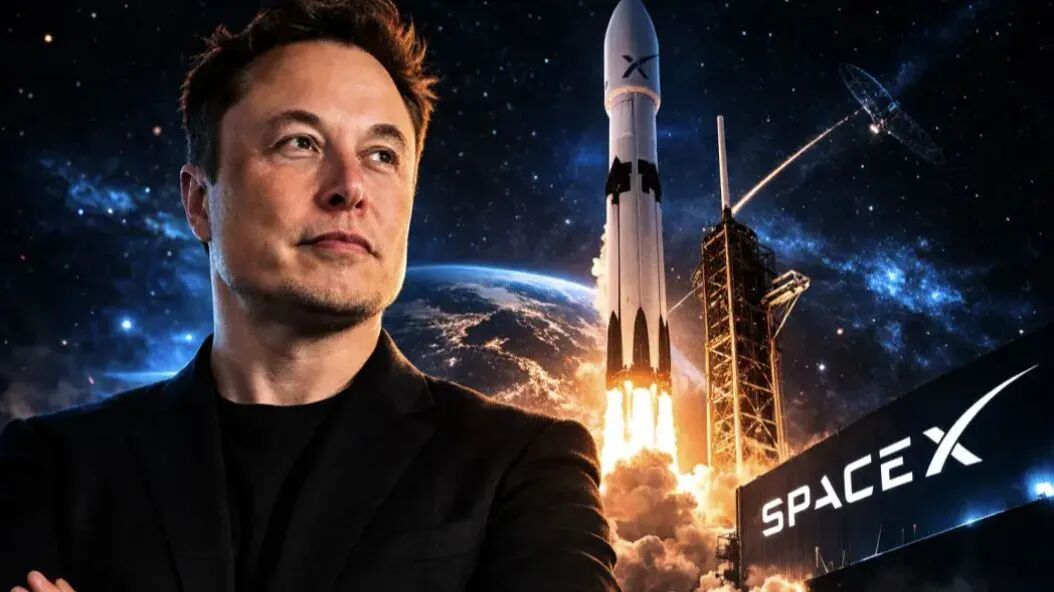
A rocket company wants to borrow forty billion dollars to buy AI chips. Most of them will go to ground data centres. Some of them are going into orbit.
The deal structure, as reported by the Financial Times, is unusual. Ten billion dollars in bank loans. Thirty billion dollars in investment-grade bonds. Apollo Global Management is leading the syndicate. PIMCO is among the asset managers in early discussions. The full package is expected to close sometime in 2027.
The headline number is striking. The context is more striking still. SpaceX completed a seventy-five-billion-dollar IPO in June, the largest in history. Less than four months later, the company is back in the capital markets looking for tens of billions more.
This is no longer a rocket company with an AI side project. It is an AI infrastructure company with a rocket division.
All-In on Nvidia
On the August earnings call, Musk made the position explicit. Every SpaceX AI project will run on Nvidia architecture. The next-generation Vera Rubin platform is, in his words, the best AI compute platform currently shipping. No second-source hedging. No AMD contingency. All-in.
The order book is correspondingly large. This is not a few thousand accelerators. It is a multi-cluster procurement measured in tens of thousands of units, designed to support the kind of frontier-model training workloads that no other current generation hardware can host.
Most of the chips will go into ground-based AI data centres running the Grok model family. Some of them are destined for the Starmind satellites — Musk's planned orbital compute constellation that will, if it works, run inference in space.
Why Orbit
The orbital angle is the part most observers initially dismissed. The economics are unusual. Solar power is continuous above the atmosphere. Vacuum cooling removes the largest operational cost of terrestrial data centres. Energy, the binding constraint on every terrestrial AI build-out, becomes essentially free in orbit.
The thesis is audacious. The execution problems are visible from the ground. Launch cost is high even at SpaceX's volumes. Radiation hardening for high-bandwidth GPU memory is hard. Repair is impossible. Latency to ground is non-trivial for some applications. And the regulatory environment for large orbital compute constellations is barely defined.
None of those problems is unsolvable. All of them cost money. The point of the forty-billion-dollar raise is to give the company the financial headroom to attempt all of them at once.
The Cash-Burn Question
The financing structure carries a particular kind of risk. Forty billion dollars of debt at current investment-grade spreads is a meaningful annual interest bill. The principal repayment schedule is back-loaded. The coupon is not.
If AI revenue at SpaceX grows as fast as the model roadmap implies, the interest bill is manageable. If it does not, the cash-flow stress shows up in earnings before the principal comes due. The company's overall debt structure — combining the IPO proceeds, the new bond issuance, and the underlying capex commitments — leaves relatively thin room for execution missteps.
Investors noticed. The first round of coverage framed the deal as a question. Is the company buying compute capacity it has already proven it can monetise, or is it buying optionality on a future that may not arrive in time to cover the carrying cost?
The Moat Argument
The countervailing argument is the moat. Nvidia's Vera Rubin supply is genuinely constrained. The bottleneck sits at TSMC's CoWoS packaging line. Allocation is rationed. Companies that wait to lock in capacity lose it to companies that move first.
SpaceX has moved first. By committing the largest single AI accelerator purchase on record, the company has secured a multi-year allocation that competitors will struggle to match. Whether the chips are used in Texas or in low Earth orbit is, from Nvidia's perspective, a secondary question.
The same logic extends to the talent market. The best AI infrastructure engineers want to work on problems that have not been solved. Running a frontier AI cluster in orbit, even if it ultimately fails, is a more interesting problem than running another ground-based data centre. The deal structure is buying compute. It is also buying attention.
What It Means for the Industry
Until this year, the assumption inside the AI industry was that the high-cost participants would be software companies — OpenAI, Google, Microsoft, Anthropic. Hardware vendors, chip designers, and infrastructure providers were paid to be the picks and shovels.
SpaceX has rewritten that assumption. A rocket company is now bidding at the same scale as the software labs. The reason is not complicated. AI infrastructure is being constrained by the supply of accelerators and the supply of power. SpaceX has decided it can move on both constraints at once — by buying accelerators directly and by putting some of them in orbit, where power is unlimited.
Whether the bet pays off is a question for the next decade. The financing of the bet is a question for the next quarter. The two will be answered in the same order.
The Mirror Image
The deal also illustrates how the AI capex cycle has produced an unexpected mirror image. Two years ago, the largest debt-financed infrastructure bet in the AI industry was Microsoft's training clusters. The next year, it was Google's. This year, it is a rocket company.
The pattern is consistent with the early stage of any large infrastructure boom. Demand outruns supply. Margins compress for incumbents. New entrants take outsized risks to claim future optionality. Some of those risks pay off. Most do not.
The SpaceX bet is the cleanest test of the pattern available in the AI infrastructure market today. If it works, the orbital compute thesis becomes a major new industry. If it fails, the company still owns a multi-year allocation of the most sought-after hardware on earth, and a debt-service schedule that has to be respected.
Either way, the rest of the AI industry now has a competitor in a category nobody had previously considered. SpaceX is no longer just launching rockets. It is launching AI infrastructure. The distinction is going to matter.